
Table of Contents
What Exactly Is CTC Tea? (Crush, Tear, Curl)
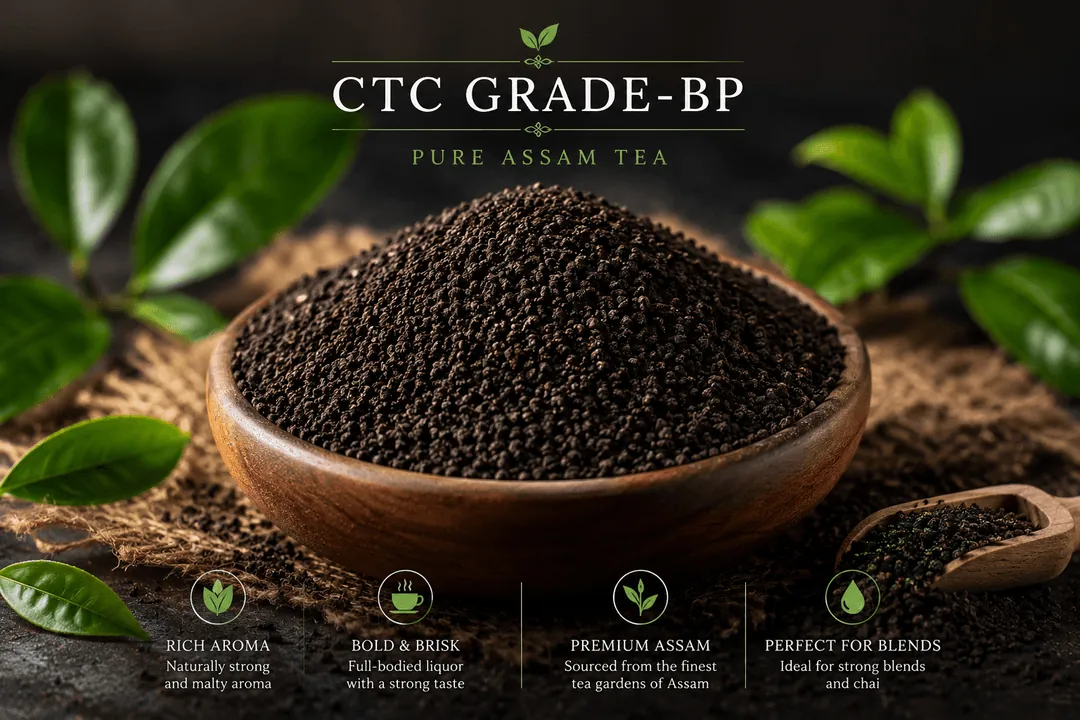
In the tea industry, CTC stands for Crush, Tear, Curl—a specialized manufacturing method pioneered in Assam during the 1930s. Rather than manually rolling whole leaves into long wiry orthodox shapes, tender freshly plucked tea shoots (predominantly Camellia sinensis var. assamica) are passed through a series of cylindrical rollers with sharp toothed blades. These rollers crush the leaf cells, tear the fibrous tissue, and curl the fragments into dense, uniform hard pellets.
Because the leaf cell walls are thoroughly disrupted, the polyphenols and theaflavins infuse almost instantly into boiling water. This gives CTC tea its signature golden-amber liquor, brisk astringency, and strong body capable of supporting generous additions of rich milk and spices without getting diluted.
The Dark Secret of Commercial Dust Tea in Supermarkets
Walk down the beverage aisle of any Indian supermarket and you will see dozens of mass-market red and yellow boxes labeled "Kadak Tea" or "Strong Blend". What most consumers do not realize is that the vast majority of commercial commercial brands rely heavily on Tea Dust (Grade D, PD, and CD)—the powdery byproduct left behind after primary tea sorting.
Dust particles have maximum surface area exposure to air and moisture. While they dye boiling water dark brown within seconds, they lack essential aromatic oils. Worse, commercial dust often sits in auction warehouses for 8 to 14 months before being packaged, requiring chemical colorants and synthetic caramel malt sprays to mimic fresh tea flavor. This high concentration of oxidized tannins is precisely why many drinkers experience morning heartburn and gastric acidity after two cups of commercial supermarket tea.
Head-to-Head Comparison: CTC Grains vs Dust Sweepings
| Parameter | Ek Cup Zindagi Pure BP/BOPL CTC | Commercial Supermarket Dust Tea |
|---|---|---|
| Leaf Cut | Uniform, bold spherical granules (Broken Pekoe) | Fine powder, floor sweepings, and broken fibers |
| Sourcing Timeline | Direct from Upper Assam gardens within 15 days of plucking | Auction-traded lots aged 8–12 months in humid transit |
| Infusion Color | Bright, glowing copper-gold with crimson undertones | Dull, cloudy grey-brown or muddy sludge |
| Aroma & Taste | Rich malty sweetness, brisk throat kick, clean palate | Harsh bitter astringency with synthetic aftertaste |
| Leaf Usage Per Cup | 1 level teaspoon (approx. 2.5 grams) | 2 heaping teaspoons (approx. 4.5 grams) |
How to Brew Authentic Kadak Chai with 30% Less Leaves
When using high-density whole grain CTC like Ek Cup Zindagi’s Aravali Premium Leaf Tea, you do not need to over-scoop:
- Step 1 (Water Base): Bring 100ml of fresh, filtered water to a rolling boil in a heavy saucepan.
- Step 2 (The Steep): Add exactly 1 teaspoon (2.5g) of whole CTC grains. Allow it to simmer on medium flame for 2.5 minutes until the water turns rich ruby red.
- Step 3 (Milk Integration): Pour in 60ml of whole buffalo or cow milk along with your preferred sweetener (or desi jaggery).
- Step 4 (The 3-Boil Simmer): Let the chai rise to the brim three times, gently swirling the pan between each rise. This emulsifies the milk fat globules with the tea tannins, yielding a velvety, creamy cup with dense frothy crema.
Frequently Asked Questions
Q: Does CTC tea have more caffeine than green tea?
Yes. High-grade Assam CTC tea contains roughly 45–65mg of caffeine per 150ml cup, providing an invigorating sustained energy boost without the jittery crash associated with instant coffee.
Q: How long can I store unopened whole leaf CTC tea?
When sealed in multi-layer aluminum or foil-lined ziplock pouches away from direct sunlight, fresh CTC retains its briskness and aroma for up to 18 months.